

Introduction
The digital landscape is evolving at lightning speed. What once seemed like a stable playing field — optimizing web pages for traditional search engines — is now shifting under our feet. With the rapid adoption of AI-powered search tools and generative engines, businesses are rethinking how they show up online.
Where Search Engine Optimization (SEO) was once king, newer strategies like Answer Engine Optimization (AEO) and Generative Engine Optimization (GEO) are emerging. These methods aim not just for search ranking — but to shape how AI-driven systems surface your brand in conversational, answer-centric formats.
In this article, we’ll unpack what SEO and AEO/GEO mean today, explore their strengths and limitations, and examine how savvy businesses can blend both to stay visible as search continues to evolve.
Understanding the Foundations — What Is SEO?
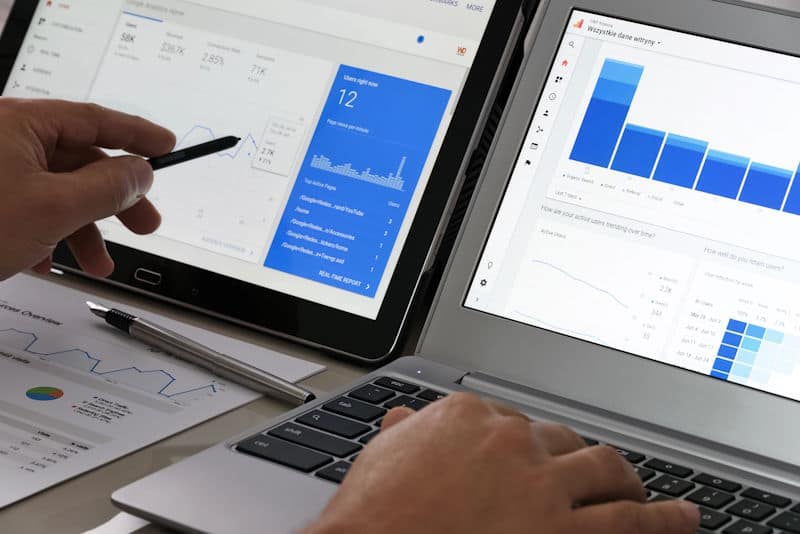
At its core, SEO is about aligning web content so that traditional search engines (think Google, Yahoo and Bing) can crawl, index, and rank it — ideally on the first page of search results when users type in relevant queries.
Key Components of SEO
-
On-page optimization: This includes writing relevant, high-quality content, embedding keywords strategically, optimizing page titles & meta descriptions, and ensuring content delivers value to the user.
-
Off-page optimization: Building backlinks from credible domains, brand mentions, social signals — essentially cultivating authority and reputation beyond your site.
-
Technical SEO: Ensuring site speed, mobile responsiveness, crawlability, clean site architecture, structured data (when appropriate), secure protocols (HTTPS), and more.
These components work together to help search engines interpret your site as valuable, trustworthy, and relevant for certain queries.
Pros of SEO
-
Long-term, sustainable visibility: Once your pages rank high, they can continuously attract organic traffic over months or years (assuming you maintain them).
-
Measurable and trackable: Metrics like impressions, clicks, bounce rate, dwell time, conversion — all available via analytics tools.
-
Brand authority and trust: High rankings often signal credibility to users.
-
Predictable process: SEO tactics are well established; strategies and best practices are documented, tested, and understood.
Cons of SEO
-
Intense competition: Everyone wants that top spot; grabbing and holding #1 is tough.
-
Constant maintenance: Algorithms change, competitors rise, content ages — you must regularly update and optimize.
-
Click-through dependence: SEO success still often depends on someone clicking your link. With emerging “zero-click” behaviors, that may not always happen.
-
Algorithm risk: A single update or shift in ranking factors can impact visibility dramatically.
SEO remains the backbone of most digital marketing strategies — but its dominance is being challenged by new search paradigms.
What Is AEO/GEO — Answer Engine & Generative Engine Optimization?

As user search behavior evolves, so does how people consume information. Instead of scrolling through pages of blue links, many users now get direct answers via AI-powered tools. That’s where AEO and GEO enter.
-
AEO (Answer Engine Optimization) traditionally focused on optimizing content so it’s surfaced in featured snippets, knowledge panels, or voice assistants. But with generative AI becoming more mainstream, its scope has broadened.
-
GEO (Generative Engine Optimization) is the newer, broader notion: optimizing content so that AI-driven engines (like chatbots, LLM-based search tools, or synthesizing systems) can parse, cite, and present your content as part of their generated answers.
According to recent industry definitions: while SEO aims to rank for keywords, AEO/GEO aims to be recognized by AI — to shape not just whether a page appears, but whether it’s considered authoritative enough to pack into a summarized answer.
Key Components of AEO/GEO
Optimizing for AI-powered engines isn’t simply about sprinkling keywords. It demands a shift in mindset and execution. Here’s what matters for AEO/GEO:
-
Structured data & semantic markup: Use schema, metadata, clear labeling — so AI crawlers can understand what your content is about.
-
Clear, context-rich, well-organized content: Content that flows logically, answers questions directly, uses headings/subheadings, bullet lists — basically, formats AI appreciates for summarization.
-
Strong authority & credibility signals (E-E-A-T): Expertise, Experience, Authority, and Trustworthiness matter more than ever when AI evaluates who to cite.
-
Entity-based optimization: Rather than just keywords, focusing on entities (people, brands, products, concepts) helps AI link context and references properly.
-
Content designed for AI summarization: Brief summaries, clear takeaways, answer-first approach — not buried deep below filler content.
In essence, AEO/GEO treats content as “source material for AI answers,” not just “pages to rank.”
Pros & Cons of AEO/GEO
Pros
-
Visibility in AI-generated, zero-click answers: As more users rely on AI tools for quick answers, content optimized for AEO/GEO has the chance to show up in answers — even if they never visit your site. This can vastly broaden reach beyond traditional click-through traffic.
-
Enhanced brand authority & reputation: Being cited by AI systems can position your brand as an expert or credible source — valuable social proof when consumers rely on AI answers to make decisions.
-
Future-readiness: As AI search becomes more prevalent (in chatbots, assistants, smart devices), brands already optimized for AEO/GEO may gain an early advantage.
-
Potential for broader reach beyond search ranking limitations: Because AI can pull from multiple sources, smaller or niche sites with high-quality content might get cited — not just big domains with lots of backlinks.
Cons and Challenges
-
Emerging discipline — uncertain metrics and outcomes: Unlike SEO, where we have decades of performance data, AEO/GEO is still new. Tracking “visibility” in AI answers is harder than tracking clicks or rankings.
-
Lack of transparency from AI systems: Many generative engines are black boxes — difficult to predict exactly how or why content is cited (or ignored). That means even well-optimized content may not be used.
-
Risk of brand misrepresentation or omission: If AI doesn’t cite your site — or worse, cites incorrect content — you lose visibility or risk misinformation. Some experts warn that rushing into AEO/GEO without maintaining brand control is a “trap.”
-
Requires different skill set and resources: Content creation for AI visibility demands semantic structuring, credible sourcing, metadata implementation, and sometimes deeper expertise — beyond traditional SEO skills.
Example Scenarios: SEO vs AEO/GEO in Action

To ground this in real-world terms, consider these examples:
Example 1: Informational Article
A company publishes a detailed guide: “How to Choose Ergonomic Office Chairs.” Under traditional SEO, they optimize for keywords (“best ergonomic office chair,” “office chair buying guide”), build backlinks, and may eventually rank in organic SERPs. That drives traffic to their site, where the user reads the guide, maybe clicks affiliate links, or converts.
Under AEO/GEO mindset, the company also:
-
Structures content with clear headings and bullet lists.
-
Adds schema markup marking it as a “How-to Guide.”
-
Ensures E-E-A-T: author credentials, references, and updated data.
When a user asks an AI chat assistant: “What should I consider when buying an ergonomic office chair?”, the AI might synthesize a brief answer citing the company’s guide — giving the brand exposure even if the user never clicks through.
Example 2: Service-Based Business (e.g. Legal, Finance)
A law firm uses SEO to drive traffic for “estate planning lawyer Chicago.” But with AEO/GEO, they also create trust-oriented content: What is estate planning? Why it matters? Ethical guidelines, client trust, testimonials. They invest in credibility, clarity, structured content.
When someone asks an AI tool: “What should I know before hiring an estate planning lawyer?”, the AI may draw from their content — potentially steering leads toward the firm before the user even visits any website.
This shift matters especially in sectors like legal, health, finance — where trust and authority are critical.
SEO vs AEO/GEO — Side-by-Side Comparison
| Aspect | SEO | AEO/GEO (AEO + GEO) |
|---|---|---|
| Primary Goal | Rank high in search engine results (SERPs) | Be cited or referenced by AI/answer engines |
| Core Focus | Keywords, backlinks, technical optimization | Structured data, semantic clarity, authority, readability for AI |
| Main Output | Website visits, traffic, leads from organic search | AI citations, brand visibility inside AI-generated answers, reputation signals |
| Measurement | Rankings, clicks, organic traffic, conversions | AI mention frequency, citation rate, share of voice — still emerging metrics |
| Strengths | Proven, measurable, well-understood | Early mover advantage in AI search; broader reach potential |
| Risks / Weaknesses | Saturated competition; click-through diminishing due to zero-click trends | High uncertainty; harder to track ROI; dependency on AI behavior and opacity |
The Future of Optimization — Coexistence, Not Replacement

Given how fast AI is reshaping search, some say SEO is dying. Others argue AEO/GEO will replace SEO. But in reality: SEO and AEO/GEO are converging — and coexisting.
Many experts and case studies support a hybrid approach: optimize for search engines and generative engines.
Why They Can—and Should—Work Together
-
Traditional SEO still drives massive volumes of traffic and remains crucial for discoverability, especially for commercial or transactional queries where users expect to browse sites.
-
AEO/GEO taps into a growing new audience: users who prefer quick answers, want summaries, or use AI-powered tools as their starting point.
-
Content that is well-structured, authoritative, and user-focused tends to perform better in both paradigms — meaning many SEO “best practices” overlap with GEO-friendly practices.
-
Over time, AI adoption will grow. Early investments in AEO/GEO can yield competitive advantages in brand visibility and authority.
In short — SEO lays the foundation; AEO/GEO extends your presence into emerging search frontiers.
Strategic Recommendations for Businesses
If you’re advising clients or setting strategy for your own business, here are practical steps to build a robust, future-proof optimization approach:
-
Maintain core SEO foundations: Don’t abandon proven SEO practices. Keep optimizing for site speed, mobile, content quality, backlinks — because they still matter.
-
Introduce AI-focused content structure: Use clear headings, FAQs, summaries, bullet points, schema markup — aim for readability for both humans and AI.
-
Emphasize authority, expertise, and trust: Especially for brands in YMYL sectors (finance, health, legal), invest in expert content, cite credible sources, update regularly.
-
Monitor AI visibility (even if tools are immature): Track when and where your content appears in AI-generated answers; consider surveys or brand-mention monitoring.
-
Be ready to iterate: AI search is unstable. What works today may change. Treat AEO/GEO as a test-and-learn process, not a one-time fix.
-
Use a hybrid strategy: Balance between SEO-driven traffic and AI-driven visibility — like having both a physical storefront and presence on new digital marketplaces.
Expert Insight: What Thought Leaders and Data Say

-
According to industry coverage, GEO isn’t replacing SEO — but it’s redefining the search landscape.
-
A recent study pointed out that generative engines favor “well-organized, easy-to-parse, meaning-rich content” — not just keyword stuffing.
-
Because many AI engines increasingly rely on credibility signals, “expertise, authority, trustworthiness” (often referred to as E-E-A-T) have become more important than ever.
-
At the same time, data shows a shift: more searches are now served by AI-driven summaries and fewer result in traditional click-throughs.
Challenges, Risks, and What We Don’t Yet Know
While the rise of AEO/GEO is exciting, there are real uncertainties:
-
Black-box nature of AI engines: Many generative engines don’t disclose how they select sources, weigh signals, or rank citations. That opacity makes outcome prediction difficult.
-
Lack of standardized metrics: Unlike SEO — where rankings, traffic, conversions are easy to measure — AEO/GEO lacks mature, widely accepted KPIs. What does “success” look like: mentions? citations? brand lifts? It remains ambiguous.
-
Potential for volatility: As AI models evolve, what works today (structured content, schema, bullet lists) may shift tomorrow. There’s a risk of chasing moving targets.
-
Brand risk from misrepresentation: If AI misinterprets your content or cites outdated or inaccurate info — users may get wrong answers attributed to you. This could harm trust.
-
Unequal playing field: Early movers and large brands may dominate AI citations. Smaller players might struggle to gain visibility — especially if generative engines show bias toward established publishers or domains. Some early studies even highlight “big-brand bias.”
The Road Ahead: What the Future Likely Holds
🔮 Hybrid Search Ecosystems
We expect search in 2026–2028 to become a hybrid ecosystem — part traditional engine (SERPs), part AI-driven answer engine. Users will choose what they prefer: scan a list, click through, or get instant answers.
For businesses, this means dual optimization becomes necessary: building visibility across both traditional and AI-powered channels.
📈 Evolving Metrics and Reporting
As AEO/GEO matures, tools and analytics platforms will likely evolve to measure AI-specific visibility: citation rate, share-of-voice, AI-driven referral traffic, brand awareness, etc. Agencies and SEOs will adapt their reporting frameworks accordingly.
🧑💼 Expertise & Authority as Differentiator
In a world awash with AI-generated content, the content that stands out will be the credible, expert-driven, deeply-researched, trustworthy content. Brands committed to quality over quantity will likely fare better — especially in sensitive or highly specialized fields.
⚠️ Risk of Oversaturation & Noise
As more brands chase AEO/GEO, AI engines may get flooded with optimized content. Over time, AI algorithms may adjust — perhaps prioritizing freshness, diversity, or some as-yet-unknown signals. Early gains may not guarantee long-term advantage.
Conclusion: Embrace the Evolution — But Don’t Abandon the Foundation

The rise of AEO/GEO doesn’t mean the end of SEO — rather, it’s a paradigm shift.
SEO remains vital for driving organic traffic, building brand authority, and supporting established digital marketing strategies. But as AI-driven search gains traction, optimizing for AI visibility is becoming equally important.
For forward-thinking businesses, the smart move isn’t choosing between SEO or AEO/GEO — it’s blending them. By combining the tried-and-true tactics of SEO with the emerging practices of AEO/GEO, you can ensure your content is discoverable whether users search via traditional engines or ask a chatbot for answers.
In short: SEO lays the groundwork — AEO/GEO helps you reach new audiences in the AI era.
📚 Suggested Further Reading: “AI Resource Hub”
Explore further reading to deepen your understanding:
-
A comprehensive guide by Yext: SEO vs. AEO vs. GEO — Definitions, Key Differences, and Why It Matters.
-
In-depth practical take by MarketingProfs: Generative Engine Optimization: A Content Marketer’s Guide for AI-Driven Search.
- Analytical exploration from ZERO GRAVITY Marketing: GEO vs. SEO: Full Overview
-
Surfer SEO – What is Answer Engine Optimization? 7 AEO Strategies for 2025
-
Moz Blog Whiteboard Friday – Harnessing Generative AI for SEO and Content Success
-
Content Marketing Institute – How To Build Content That Both Humans and AI Agents Trust
- GEO vs. SEO: Key Differences and Importance in Digital Marketing
- a16z.com: How Generative Engine Optimization (GEO) Rewrites the Rules of Search
- Terakeet.com: Why Brands Need Generative Engine Optimization (GEO) and SEO
- Google AI Overviews: What Do They Mean for Search?
- Foundationinc.co: Search Engine Optimization (SEO) vs Generative Engine Optimization (GEO): Key Differences and Strategies
- Cornell University: How to Dominate AI Search





No Responses